News
e-Conference on Noise from Drones
The first international conference on noise from drones
was held between 19th and 21st October 2020. It was
originally to have been held in Paris in May 2020 but was postponed to October
due to the Covid-19 pandemic. Because of the continuing pandemic, a decision
was made over the summer to make this a �virtual� conference using the Zoom platform,
which has become very familiar to all of us, for both domestic and business use,
as the pandemic has progressed. The conference was hosted by
INCE Europe, the European arm of the International Institute of Noise Control Engineering.
Andy and Charlie were both registered to go to the Paris conference (Andy was
on the Technical Committee!) and both participated fully in the Zoom version.
At Hayes McKenzie, we have been keeping a careful eye on the drone situation,
because we are very aware of the potential noise implications that their
inevitable wide-scale deployment will bring, and both Charlie and Alex (now
gone to Dyson, sadly) carried out diploma and MSc projects, respectively, on
the issue.
Pros & Cons of an e-Conference
As for many delegates, presumably, we felt some
trepidation about how a virtual conference would pan out. A �real� conference
comes with a deal of camaraderie, opportunities to catch up with old friends
and colleagues in the industry in coffee breaks, lots of debate on the subject
matter both within and outside the main technical sessions and more informal
social settings. And how would it feel to be staring at a screen for the
duration of the formal sessions rather than being in a lecture theatre or
similar venue.
The organisers had got this latter point well covered
with much shorter, pre-recorded, presentations than would be usual at a real
conference, and a much longer time set aside for the panel discussion which
followed them, incorporating all the speakers and others besides, with
questions from the �audience�. As well as the main technical sessions, one of
which Andy co-chaired, there were also some more informal sessions, where
anyone could join in. The only thing really missing was the opportunity for
informal chat in breaks between sessions which the organisers are looking into
for the next INCE Europe conference; the two yearly wind turbine noise
conference, which will also be held in a virtual space. There were some significant
advantages, of course, including lack of any travel costs, which would have
been significant for those outside the EU, lack of setting aside time to
travel,lack ofcarbon footprint associated with the travel, no
jet lag, excellent audio and visual clarity, and the overall convenience of
staying at home (or in the office for some). Albeit this included attending
some sessions in the middle of the night for the Asia Pacific and American
attendees although they were arranged such that both had access to at least one
of the two formal sessions per day within normal working hours.
Technical Presentations
The technical presentations were largely divided into
those concerned with source noise generation and those concerned with impact on
community receptors. Drones can be used for an astonishing number of different
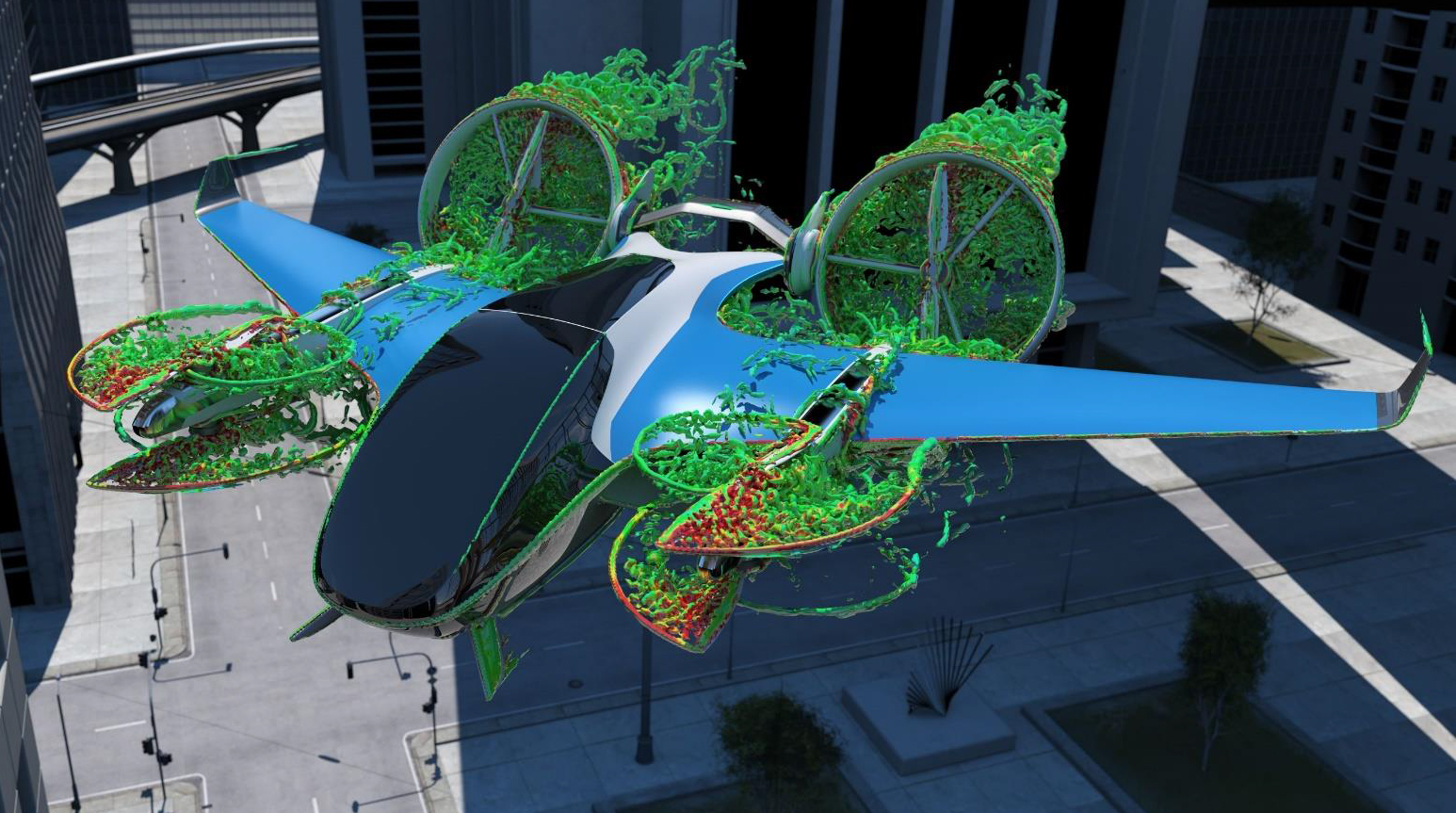
purposes and there was even talk of (driverless) air taxis! Use of drones for
some activities, such as aerial surveillance, has less noise impact as this
will usually consist of a single drone launched from a specific location, which
can be chosen at will, and a single fly-over of a specific area. What is likely
to have the highest impact, however, is their use for deliveries where noise
impact arises around the point of dispatch (take off, if you will, from the
delivery hub), under the flight path, and at the point of delivery. Whilst
fly-over noise can be expected to be minimal at typical altitudes in a
sub-urban location, it will certainly have an impact in rural areas. The
delivery hub is likely to be in a non-residential area but the flight paths of
departing drones may well pass over the nearest housing at low altitude unless
they are programmed to ascend vertically prior to commencing on the delivery
route. Even with this option, there will inevitably be a concentration of noise
prior to the dispersal of the delivery routes to their eventual destinations.
The biggest noise impact, however, is likely to arise at the point of delivery
where the drone is required to descend to relatively low altitude and hover to
complete delivery of the package, be it goods from Amazon, home delivery
groceries or ready meals, medical supplies, or even a single cup of coffee as
was discussed at least once at the conference! In such circumstances, the noise
impact on the recipient can be largely disregarded but the impact on neighbours
could be quite high, particular where multiple deliveries occur over a day.
The problem is, not only the level of noise, but more
particularly the character of the noise, of which various samples were
presented during one of the informal sessions at the conference. This arises
from the use of multiple rotors, which are a fundamental part of the way drones
operate and which permit the very precise movement of which they are capable.
The noise from each of these rotors interacts to produce a noise which is
rather akin to that from a giant insect and, because it is the
interaction
which causes this effect, rather than the individual sources, this presents a
significant challenge to designers concerned with minimising noise. It also
presents something of a challenge to those assessing the noise because the
character of the noise cannot be classified as tonal, or impulsive, which are
the two acoustic features which can be, and are usually, assessed as the main
contributors to noise character. Rather akin to the �buzz-saw� noise, which
occurs for some aircraft with modern high by-pass ratio jet engines on
take-off, which Hayes McKenzie have investigated in our
paper
with ISVR for Applied Acoustics
, it needs specific consideration outside
the parameters which are normally applied to determine the kind of character
correction applied as part of assessment methodologies such as
BS4142.
What�s Next
All in all, the conference was deemed to be a great
success by the 170 delegates from 21 countries who attended, and the intention
is to hold a further conference with the eventual intention that it become a
two yearly event like the INCE Europe wind turbine noise conferences, of which
the 9th will be held next year. Although it is likely that any 2022
conference will be a �real� conference, it is inevitable that, drawing on
experience at this conference and elsewhere, there will be a virtual element to
allow those for whom costs and travel time would be prohibitive, to take
part.