News
Institute of Acoustics Reproduced Sound 2017 Conference Recap
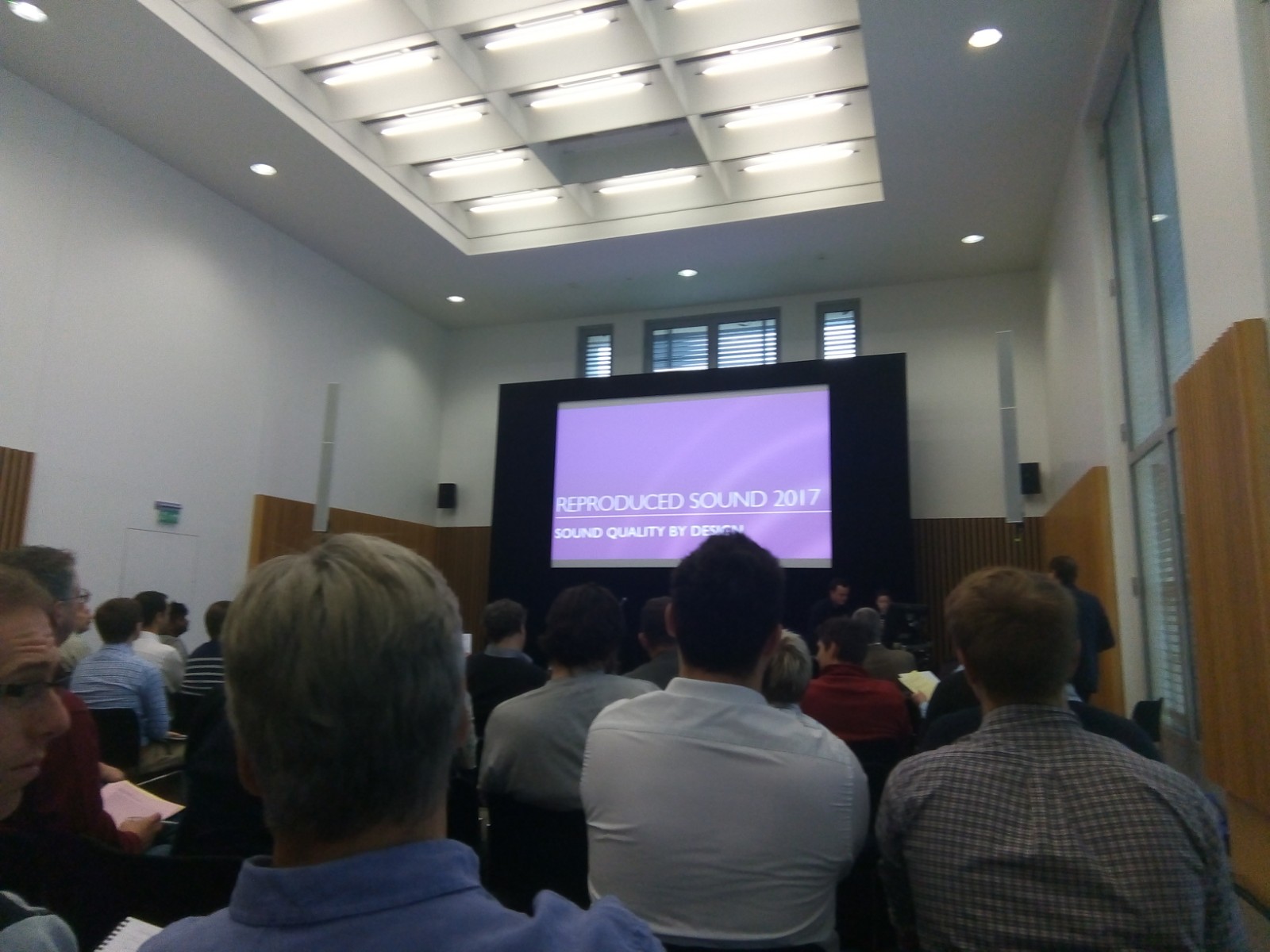
DAY
1
The
conference began with the Peter Barnet Memorial Award which was given to Floyd
E. Toole. Sadly Floyd was unable to attend but it was clear that he is held in
very high esteem by all present and his presence was missed. His presentation
was given by Glenn Leembruggen. The presentation was about loudspeaker design
and about the pitfalls in loudspeaker judgement, and about how under assessment
some of the more expensive speakers available perform significantly worse than
their cheaper counterparts.
Intelligibility and Sound Reinforcement
This
section of the conference contained two very informative presentations about
acoustic modelling of large spaces, discussing how accurate modelling in large
spaces at high frequencies is time consuming and computationally demanding. There
included some innovative techniques for speeding up this process.
The next presentation left all delegates
in no doubt that speech intelligibility is impossible to assess by
computational means, giving many examples of how current methods fail. A good
case was made for incorporating hard of hearing viewers into intelligibility
research. However there appears to be some hope in object based broadcasting
and that hard of hearing viewers will one day simply be able to mix TV sound
for themselves.
This section culminated with a
fascinating presentation about active noise control in event noise management.
In the densely populated nation of Belgium experiments have been conducted with
large subwoofer arrays which use phase cancellation to reduce sound levels at
nearby dwellings. A microphone which was positioned between the concert
location and nearby dwellings consistently calibrated the phase cancellation required
from the subwoofer array and some good results were shown. It made one wonder
about what further applications such technology can have beyond pop concerts�
Cinema Sound
This
section included two presentations about exciting new innovations in theatre
sound � the first of which was a development from audio description in theatres
– why not make a soundtrack to a live theatre show? These enhanced the viewing
experience for sighted listeners and made the experience a lot more inclusive
for the blind, as well as being cheaper than having a live audio describer.
The second presentation was about
the theatre show �The Encounter� which has been running on Broadway for two
years. For this show each audience member is given a pair of wired headphones
in order to listen to the actor speak into a binaural head dummy onstage. This
seemed to work well in the context of the theatre show which is about a man
going about in the Amazon Rainforest. The need for wired headphones was very
aptly demonstrated when the attempt to broadcast the binaural signal to the
delegates� smartphones encountered significant problems.
The
next two presentations in this section described the infinite number of
difficulties in calibrating speakers for cinema sound, it seemed that we are a
long way off being able to create a calibration method that would work for all
cinemas.
Room Acoustics
A
presentation showed that acoustic modelling can keep up with acoustic
measurement provided that accurate enough data is known about the materials of
the room. Another presentation was about two concert halls in Germany, the
Hamburg Elb-Philharmonic Hall and the Kulturpalast Concert Hall in Dresden. We
learned about the �Hocus Pocus� of the wall surfaces, and other acoustic
considerations of these new venues.

DAY
2
Arrays and Modelling
This
section consisted of two presentations about Trans-aural Sound (by which
binaural sound is replicated by a line speaker array), and about how
technological innovations are working to solve the many challenges this
technology provides.
Measurement
The
first measurement presentation discussed mixing sound in very large spaces.
This included a discussion of the historical reason why the �target� eq of a
system is not flat, and why we should attempt to mix only direct sound, and in
doing so we will correctly control the reverberation. Current methods of mixing
were discussed which involve analysing signal picked up from a microphone
inside the venue. It appears that the ears need not play any part at all the
mixing of acoustic signals for live sound!
This was followed by a good argument as
to why the Gaussian probability density function is not the correct
distribution to use in audio signal processing � in most of the cases presented
it was found that the Laplace probability density function was a better
distribution to use. It was explained that historically the Gaussian
distribution would have been used because of the ease of generating a Gaussian
signal using analogue equipment.
New research into removing wind noise
from audio recordings by signal processing was presented. The presentation was
thought provoking and though the research is ongoing, it could pave the way for
ideal wind noise reduction in audio recordings. At present it could be very
useful for film and television however environmental noise measurements could
prove a lot more problematic. Unfortunately there were no audio examples to
listen to.
We were shown a speech conformer that
could make speech more intelligible in real time. This involved taking speech
audio and conforming it to a target spectrum � particularly useful for
scenarios such as announcements on train station platforms. It was shown that
different target spectra for men and women was important because the spectra
designed for men and women were different and actually had a negative impact on
intelligibility if applied the wrong way round. In the examples quite
stereotypical male and female voices were used, indicating there could be
issues for people with voices that didn�t conform to this.
ISVR Research
An
electronic ear trumpet. Since the advent of the hearing aid the use of hearing
trumpets has declined significantly, however this presentation investigated the
idea of an electronic hearing trumpet. It was suggested that this could be
useful in certain scenarios, particularly hospitals where people may not wear
their hearing aids all the time. While I noted that a simple device consisting
of a shotgun microphone and amplifier would solve this issue, this project set
more ambitious parameters; that the device should be a simple hand held device
no bigger than a telephone and compacted into one unit. Significant problems
were caused by comb filtering and sound insulation however this research could lead
to interesting new technology.
The other two ISVR presentations showed
further research into trans-audio, for the cases of off axis listeners and
trans-aural audio in a car.

By Charlie Everett